The Three-Card Tarot Spread: Why Past, Present, and Future Still Works
The Three-Card Tarot Spread: Why Past, Present, and Future Still Works
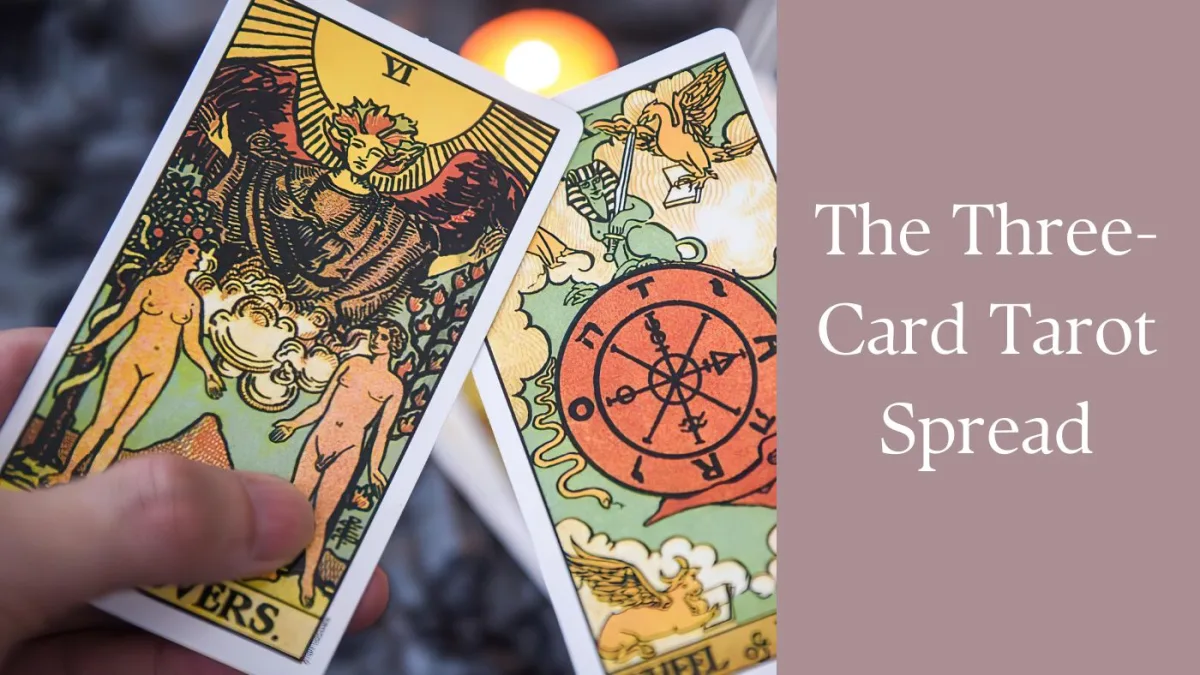
Of all the ways to read tarot, the three-card spread has earned its staying power for a simple reason: it tells a story. One card alone can answer a narrow question. A ten-card Celtic Cross can map an entire situation in exhaustive detail. But somewhere in between sits the three-card spread — just enough structure to show you where you’ve been, where you are, and where you’re heading, without overwhelming you with more than you can actually absorb in one sitting.
Why Three Cards, and Not One or Ten
There’s something almost architectural about the past-present-future layout. The first card gives you the foundation — the decisions, emotions, or events that shaped the situation you’re in now, even if you haven’t fully connected the dots yourself. The second shows you exactly where you’re standing today: the energy of the moment, the pressures at play, the choices actually in front of you. The third points toward where things are headed if nothing changes — not a fixed fate, but a trajectory, one you’re still free to redirect.
Read together, the three cards form something closer to a narrative arc than a static snapshot. That’s part of why a Free Three-Card Tarot reading tends to feel more satisfying than a single-card pull: you’re not just getting an answer, you’re getting context for the answer.
What the Three Positions Actually Mean
Card One — The Past. This card isn’t necessarily about ancient history. It might point to something as recent as last month, or as old as a belief you formed in childhood that’s still quietly steering your decisions. Its job is to explain the roots of wherever you currently stand — the “why” behind the “what.”
Card Two — The Present. This is the card most people find themselves staring at longest, because it’s the most immediately useful. It reflects the emotional and practical reality of right now — what’s actually in motion, what you’re feeling, what’s asking for your attention. If you only had time to sit with one card, this would be the one worth lingering on.
Card Three — The Future. Here’s where it’s worth being precise about what tarot actually claims to do. This card isn’t a prophecy carved in stone — it’s a projection based on the current trajectory. If the energy described by cards one and two continues unchanged, this is roughly where it leads. But tarot has always held that free will sits above prediction: notice the direction, and if you don’t like where it points, that’s information you can act on.
A Spread That Works for Almost Any Question
Part of what makes the three-card layout so enduring is its flexibility. It doesn’t require narrowing your question down to something with a strict yes-or-no answer, the way a single-card draw does. Instead, it can hold space for questions like:
- How did I end up feeling this way about my relationship, and where is it actually heading?
- What’s really going on with this job situation, and what’s coming next if I stay the course?
- What’s blocking me right now, and what happens if I don’t address it?
This is precisely why it’s one of the most requested spreads for love, career, and personal growth questions alike — it gives enough room for nuance without demanding an entire life analysis.
Getting the Most Out of a Free Reading
A few things tend to separate a genuinely useful three-card reading from one that leaves you more confused than when you started:
- Come in with a real question, not a vague hope. “What does the universe want for me?” is too broad to answer meaningfully. “What’s the underlying dynamic between me and this person?” gives the cards something concrete to respond to.
- Take a moment before you draw. A few slow breaths to set aside the noise in your head actually changes how you engage with what comes up — you’re more likely to notice what resonates rather than what you expect to see.
- Read the cards as a sequence, not three unrelated answers. The story is often in how card one explains card two, and how card two sets up card three — not in any single card taken alone.
- Resist asking the same question twice in one sitting. If the reading doesn’t sit right with you, a better move is usually to reframe the question — “what can I do differently?” — rather than reshuffling in search of an answer you’d prefer.
When Three Cards Are Enough — and When They’re Not
A three-card spread is, by design, a middle ground. If your question is small and specific — a quick check-in on a decision you’re about to make — it may actually be more depth than you need, and a single-card Yes/No draw could serve you faster. But if your situation is layered — tangled relationships, a career crossroads, a pattern you can’t quite name — three cards often aren’t enough either, and a fuller spread, or a conversation with someone who reads tarot professionally, tends to surface what a quick draw can’t.
Where it shines is everywhere in between: the everyday questions that deserve a little context, not a full life audit. That middle space, it turns out, is where most of us are actually living most of the time — which may be exactly why this spread has never gone out of style.
Related posts:
How to build inventory control
How to build financial planning
Key factors in digital product creation
Ordering 3D Prints From Abroad – How Drukuje3D Serves International Customers
The impact of retail pricing models
Top tools for managing remote teams
How to increase subscription business models
How to improve cryptocurrency adoption
How to real estate valuation
How to improve your business credit score
How to increase project management
Tips for affiliate marketing